
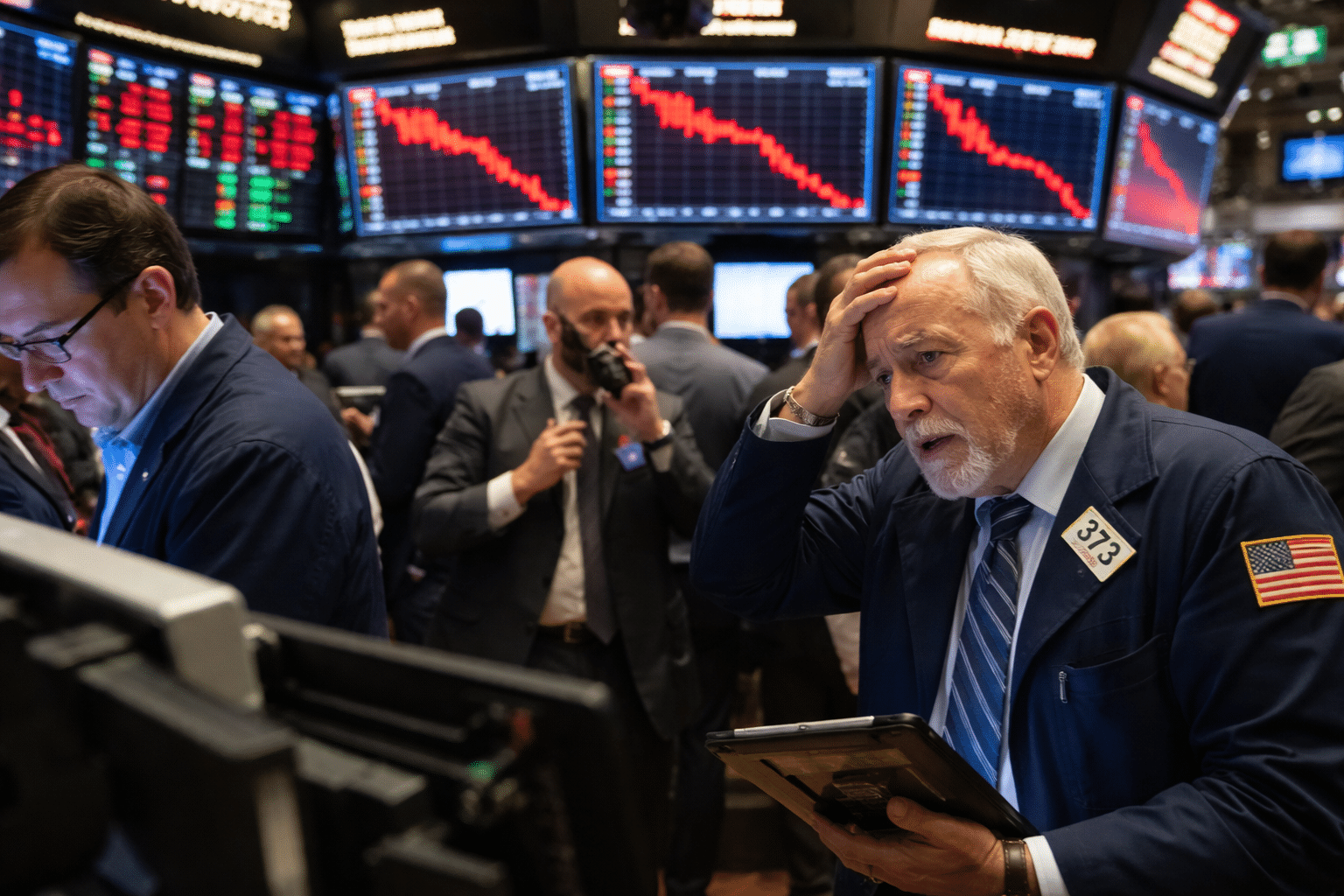
Wall Street opened lower on Thursday as persistent inflation concerns and growing doubts over artificial intelligence spending weighed on technology shares.
Stronger-than-expected producer price data added to fears that the Federal Reserve could tighten monetary policy further, putting pressure on equities.
The S&P 500 fell 0.47%, while the Nasdaq Composite dropped 1.24%.
The Dow Jones Industrial Average outperformed, rising 272 points, as gains in stocks outside the technology sector provided some support.
The declines followed Wednesday’s session, when the S&P 500 and Nasdaq recorded their biggest one-day falls since July after hotter-than-expected consumer inflation data increased expectations of further interest-rate hikes.
AI stocks extend losses as investors question spending
Technology shares remained under pressure as investors reassessed the valuations and financing of AI infrastructure projects.
CoreWeave fell around 7% in trading after tumbling more than 15% in the previous session, while Oracle dropped 0.7% following a nearly 9% decline on Wednesday.
The sell-off has also spread to corporate debt. Bond yields for CoreWeave and Oracle rose to record highs, reflecting growing concerns about the cost of financing their expansion plans.
Investors are increasingly questioning whether future growth expectations justify current valuations, particularly as AI infrastructure companies rely on substantial borrowing to fund their investments.
Chipmakers also extended their declines. Micron Technology fell around 5.7%, Advanced Micro Devices dropped 6%, Nvidia lost 3.1%, and SanDisk declined 8.7% in trading.
US-listed shares of South Korea’s SK Hynix fell 6%.
The Philadelphia Semiconductor Index has declined for six consecutive sessions, losing more than 11% and wiping out approximately $1.64 trillion in market value over the period.
This marks its longest losing streak since May 2025.
Meanwhile, Taiwan Semiconductor Manufacturing Company reported its sixth consecutive quarter of record profits but expressed caution about the outlook for 2027 because of macroeconomic uncertainty.
The comments added to concerns about the sustainability of the AI investment boom.
Producer inflation adds to Fed rate concerns
Fresh economic data reinforced concerns that inflationary pressures remain elevated.
The US Producer Price Index rose 1.3% month over month in September and 6.3% from a year earlier, exceeding economists’ expectations of 0.6% and 5.5%, respectively, according to Dow Jones estimates.
The annual increase was the largest since 2022.
The report followed September consumer price data released on Wednesday that also came in hotter than expected, strengthening expectations that the Federal Reserve could raise interest rates further before the end of the year.
Retail sales also increased in September, exceeding economists’ forecast for 0.3% growth.
Investors were preparing to assess Federal Reserve Chair Kevin Warsh’s scheduled speech at the International Monetary Fund’s annual meeting for further clues about the monetary policy outlook.
Higher interest rates could increase financing costs for AI infrastructure projects and weigh on the valuations of technology companies whose expected returns depend on future growth.
Walmart and healthcare stocks offer some support
Despite the technology-led weakness, gains in other sectors helped limit broader market losses. Walmart shares rose 4% in trading, while pharmaceutical company Merck gained more than 2%.
The Dow’s relative outperformance reflected the contrast between pressure on technology stocks and gains elsewhere in the market.
The Nasdaq has fallen more than 3% from the record highs reached last week as concerns over inflation, interest rates and AI spending threaten to overshadow the third-quarter earnings season.
According to LSEG data, S&P 500 companies are expected to report earnings growth of 30.6%.
Investors are now weighing whether corporate earnings can sustain market valuations as borrowing costs rise and companies face greater scrutiny over the returns from AI investments.
The post Nasdaq falls 1.2% as AI sell-off deepens on inflation and Fed rate fears appeared first on Invezz