
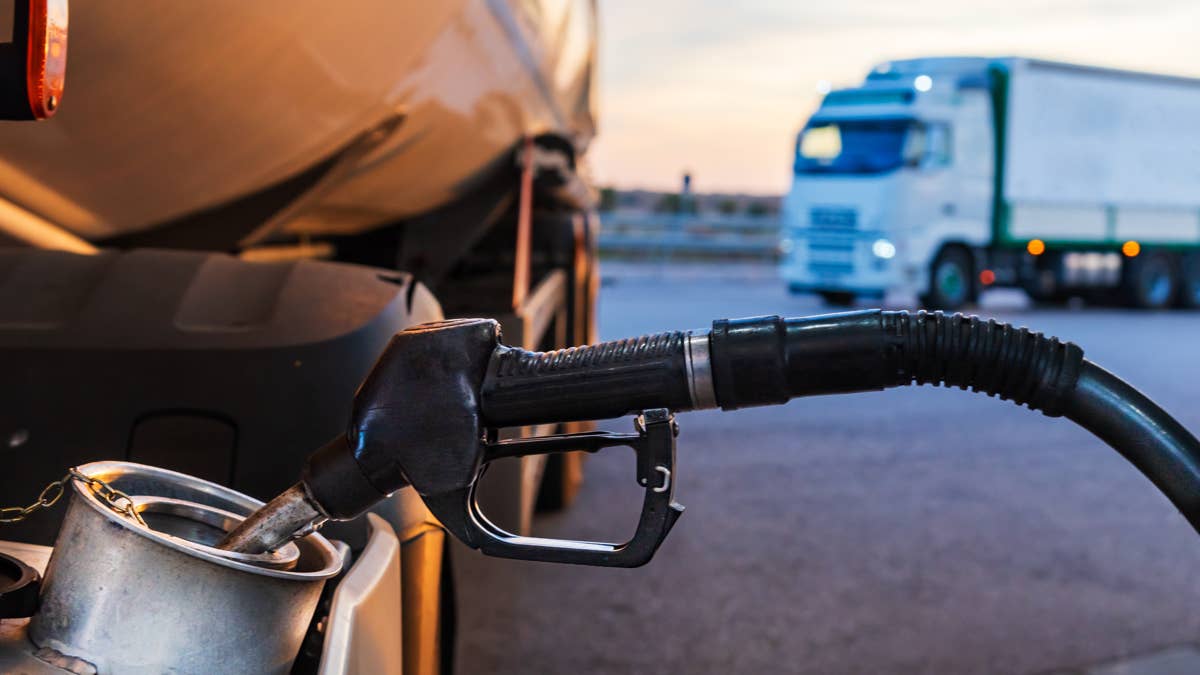
When fuel gets expensive, it’s tempting to try to keep more of it at home. One of the oldest ideas in energy policy, it’s also one the fuel industry has fought every time it’s suggested.
You can see why the strategy keeps resurfacing. Filling a 15-gallon tank with regular gas now costs about $67, roughly $20 more than a year ago, based on AAA’s national average.
Diesel is worse. At $6.52 a gallon, it costs $2.83 more than it did a year ago, and that cost rides along on every truck, tractor, and delivery van that moves the things you buy.
Farmers and truckers want relief before the Nov. 3 midterm elections, and Republicans in competitive races are pressing the White House to act, according to Reuters. On Tuesday, Sept. 22, President Donald Trump gave them the answer they wanted to hear.
A day later, his own energy secretary said the solution would backfire, causing problems at the gas pump.
What Energy Secretary Chris Wright said about a diesel export ban
“The blunt tool of banning diesel exports definitely doesn’t work,” Energy Secretary Chris Wright said at an event in New York on Sept. 23, Reuters reported.
He then spelled out what would happen. “If you can’t export the diesel that comes out of our refineries, you run out of places to store it, and you have to reduce U.S. refining, which would put upward pressure on gasoline prices and jet fuel prices,” Wright said.
More Energy:
- Hormuz closed in February; now France is running dry
- Why $5 gasoline is about to force a major holiday shift
- Exxon Mobil CFO warns of hidden risks behind oil supply shock
Public disagreement with the president from a cabinet member is relatively uncommon in this administration, Reuters noted.
Wright has held this line for months. “We produce more diesel fuel than we consume,” he told CNBC in May, adding that if the U.S. stops exporting diesel, “we got to turn our refineries down. That would make no sense at all,” he said, according to Newsweek.
Why the president backed a ban on diesel exports
President Trump endorsed the idea on Sept. 22 during a meeting with Ukrainian President Volodymyr Zelensky at the United Nations General Assembly. “I’ve called for it. I’ve called for it within my people,” he said when asked whether he supported blocking diesel shipments abroad, Axios reported.
Asked when a decision would come, the president said, “Fast, one way or the other.”
Treasury Secretary Scott Bessent said the administration is examining “whether it’s feasible in terms of the overall refining capacity,” and whether a full or partial ban would work, Axios reported.
The cabinet is split. Agriculture Secretary Brooke Rollins has raised high diesel prices with the president. Interior Secretary Doug Burgum warned a ban could invite retaliation from countries that ship fuel to the U.S., which could hurt states like California, according to Reuters.
A White House official said President Trump “wants to see gas prices at the pump fall and is evaluating all the options on the table.”
How a diesel export ban could raise gas and jet fuel prices
Refiners can’t make diesel by itself. Every barrel of crude they run comes out as a mix of gasoline, diesel, jet fuel, and other products, so cutting one means cutting all of them.
U.S. exports of distillate fuel, the category that includes diesel, averaged 1.61 million barrels a day in the week ended Sept. 11, according to the Energy Information Administration (EIA). U.S. distillate production runs about 5.3 million barrels a day, based on EIA figures cited by Time.
In my analysis, that ratio decides the debate. Close an outlet for roughly 30% of output and refiners have two choices: store the extra diesel, which Wright says they can’t do for long, or run less crude, which also means less gasoline and jet fuel.
Energy analysts largely agree. Here is where the key voices stand:
- Energy analysts at TACenergy wrote that losing exports “would force many plants to cut run rates, and reduce their output of gasoline (and numerous other products) as well, which becomes counterproductive,” according to Reuters.
- “Restricting U.S. energy exports would only compound the problem,” American Petroleum Institute CEO Mike Sommers said, according to Time.
- Analysts told Time a ban could lower diesel prices at first on the Gulf Coast and in the Midwest, while West Coast prices could rise if supply can’t be rerouted fast enough.
What record diesel and gas prices mean for your wallet
National average diesel hit $6.5217 a gallon on Sept. 23, up from $5.6074 a month ago and $3.6933 a year ago, according to AAA. Regular gas was $4.4744, up from $3.1719 a year earlier.
I ran the fill-up math. A 15-gallon tank of regular costs $67.12, about $19.54 more than a year ago. A 20-gallon diesel fill-up costs $130.43, about $56.57 more.
In California, diesel averaged $8.4387 a gallon on Sept. 22, according to AAA’s state averages.
Diesel costs also show up in prices you don’t pump yourself. They reach your grocery bill through trucking, and jet fuel costs are already squeezing airlines, with American Airlines’ CEO warning about rising fuel bills last week.
What happened the last time Washington weighed a fuel export ban
This debate has happened before. In 2022, when the Biden administration weighed limits on refined-product exports, the oil industry’s two biggest trade groups pushed back in an Oct. 4, 2022, letter to then-Energy Secretary Jennifer Granholm.
“Banning or limiting the export of refined products would likely decrease inventory levels, reduce domestic refining capacity, put upward pressure on consumer fuel prices, and alienate U.S. allies during a time of war,” wrote API President Mike Sommers and American Fuel & Petrochemical Manufacturers President Chet Thompson. No ban followed.
Russia is running the experiment now. Moscow has extended its own diesel export ban through Oct. 31, pulling barrels from a global market that was already short on them.
What to watch before a decision on diesel exports
The president promised a quick call, so the next few weeks matter. Watch whether the administration picks a partial ban, which Bessent floated, over a full one.
If you drive a diesel truck or run a small business with a fleet, budget for prices to stay high either way. Neither a ban nor the status quo adds refining capacity overnight.
If you heat your home with oil, pay attention, too. Heating oil is a distillate, so the same supply squeeze reaches your furnace as winter arrives.
Wright summed up his case at a Daily Caller event last week, according to Newsweek. “We need more supply, not less supply,” he said.
For your wallet, the bigger risk is what a ban would do to refinery output, and through it, to the price of gasoline.
Related: The Hormuz crisis just did what climate summits couldn’t