
Americans have paid about $97 billion more for fuel since the Iran war started in late February, roughly $740 extra per household, according to CNN. President Trump says prices will come down after the midterms. The CEO of Chevron just said publicly he does not see how that happens quickly.
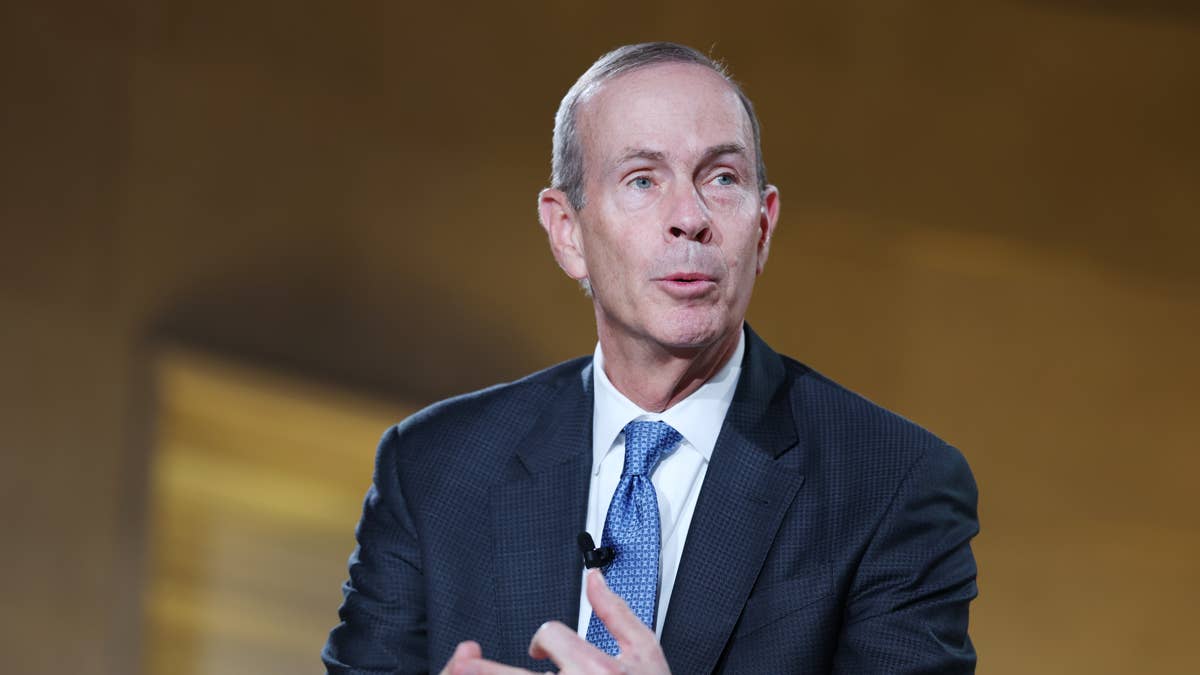
Mike Wirth, Chevron’s chairman and chief executive, spoke at a University of Texas at Austin energy conference on September 11. He told the audience that the mechanisms that helped absorb the oil supply shock earlier in the conflict have largely been used up, and that prices are more likely to rise than fall over the next few months.
What Wirth said about the oil market’s shrinking buffers
When the U.S.-Iran conflict began, the oil market had several ways to handle the disruption. Countries could release crude from strategic reserves. Commercial inventories could be drawn down. The U.S. eased restrictions on sanctioned crude stored on vessels at sea. Those measures helped limit the initial price spike.
“Those have largely now played out,” Wirth said. The energy system no longer has the buffers it had when the war began.
The loss of flexibility became more acute after attacks knocked out a major Saudi crude pipeline that had been bypassing the Strait of Hormuz. That single disruption put an estimated 2.5 million barrels of oil per day in limbo, tightening a market that was already running short on supply.
More Oil & Gas:
- Goldman Sachs doubles down on oil price forecast for 2026
- Drivers lose control over gas price squeeze
- A big shift in the U.S. energy market is about to happen
“It’s harder to envision a scenario where prices soften and quickly,” Wirth added. “I think the risks remain to the upside over the next few months.”
Wirth also said the Trump administration had discussed Ukraine’s strikes on Russian energy infrastructure and that Chevron had since seen fewer disruptions to its operations at Kazakhstan’s Tengiz oilfield, one of the company’s largest producing assets.
What prices look like at the pump right now
The average U.S. diesel price crossed $6 per gallon for the first time on September 10, as TheStreet reported. The Iran war squeezed supplies from the Middle East. Ukrainian drone strikes on Russian refineries took out more. By the time Wirth spoke on September 11, the national retail diesel price had hit a record $6.23 a gallon.
Gasoline prices came back up to about $4.32 a gallon. They had slipped below $4 for a stretch during the summer when oil pulled back from its March 2026 peak near $120 a barrel. That pullback is now over. Crude has been moving higher for weeks as attacks on shipping and energy infrastructure picked back up.
Brent crude for November 2026 delivery was trading near $105 a barrel around the time of the conference. West Texas Intermediate crude was just above $100. Before the Iran war started in late February, Brent was around $70. It is now up about 50%.
China has also been adding demand pressure. Chinese buyers have returned to the international market after running down domestic stockpiles for months. China’s return to the international oil market has made it harder for refiners in other countries to satisfy world demand.
What Trump has said and why Wirth’s view differs
Trump said on September 9 that oil prices would come down “right after the election,” according to ABC News. He tied the timeline to the November midterms and the prospect of ending the Iran war.
Interior Secretary Doug Burgum has called the latest supply disruption “temporary” and pointed to plans to expand Venezuelan output and U.S. refining capacity as near-term offsets, according to Seeking Alpha.
The administration has already deployed several tools to try to bring prices down. It tapped the Strategic Petroleum Reserve heavily, with reserves falling below 300 million barrels by early August, down more than 100 million barrels since the start of 2026. It also eased restrictions on sanctioned crude to increase available supply.
Wirth’s remarks point in a different direction. He did not predict when or how prices would stabilize. He said the cushions that previously worked are gone, and that the risks sit to the upside. That is not the same as saying prices cannot fall. It is saying the forces needed to make them fall are harder to identify right now than they were six months ago.
What higher energy costs mean for the economy
Diesel is the fuel that moves the American economy. Trucking, farming, construction and freight transportation all run on it. When diesel costs more, the price of moving goods rises, and businesses tend to pass that cost along.
Gasoline affects household budgets more directly. At $4.32 a gallon, consumers are spending more at the pump and have less left for everything else. That spending squeeze is one reason the $97 billion extra cost figure translates to a real reduction in household purchasing power.
The Federal Reserve is in a hard spot. Rate hikes slow spending. They do not add oil to the market. Diesel costs flow through the whole economy. Truckers charge more. Distributors charge more. Grocery bills go up. The Fed has to decide whether to keep tightening into that pressure or watch inflation settle higher. Wirth did not predict how this resolves. He said the tools that previously limited the damage are exhausted.
For investors, higher crude prices lift Chevron’s upstream revenue and free cash flow in the near term. But airlines, trucking companies, retailers and manufacturers face the opposite pressure. The broader economic question, which Wirth left open, is whether the market has enough spare capacity to absorb another disruption before inventories are rebuilt.