Elon Musk is not done taking the driver out of the car.
Speaking at the DealBook Summit on Nov. 18, the Tesla CEO said the company plans an autonomous version of the Model Y “that would not have steering wheels or pedals and would be good for transporting groups of 6 or 7 people,” according to Benzinga.
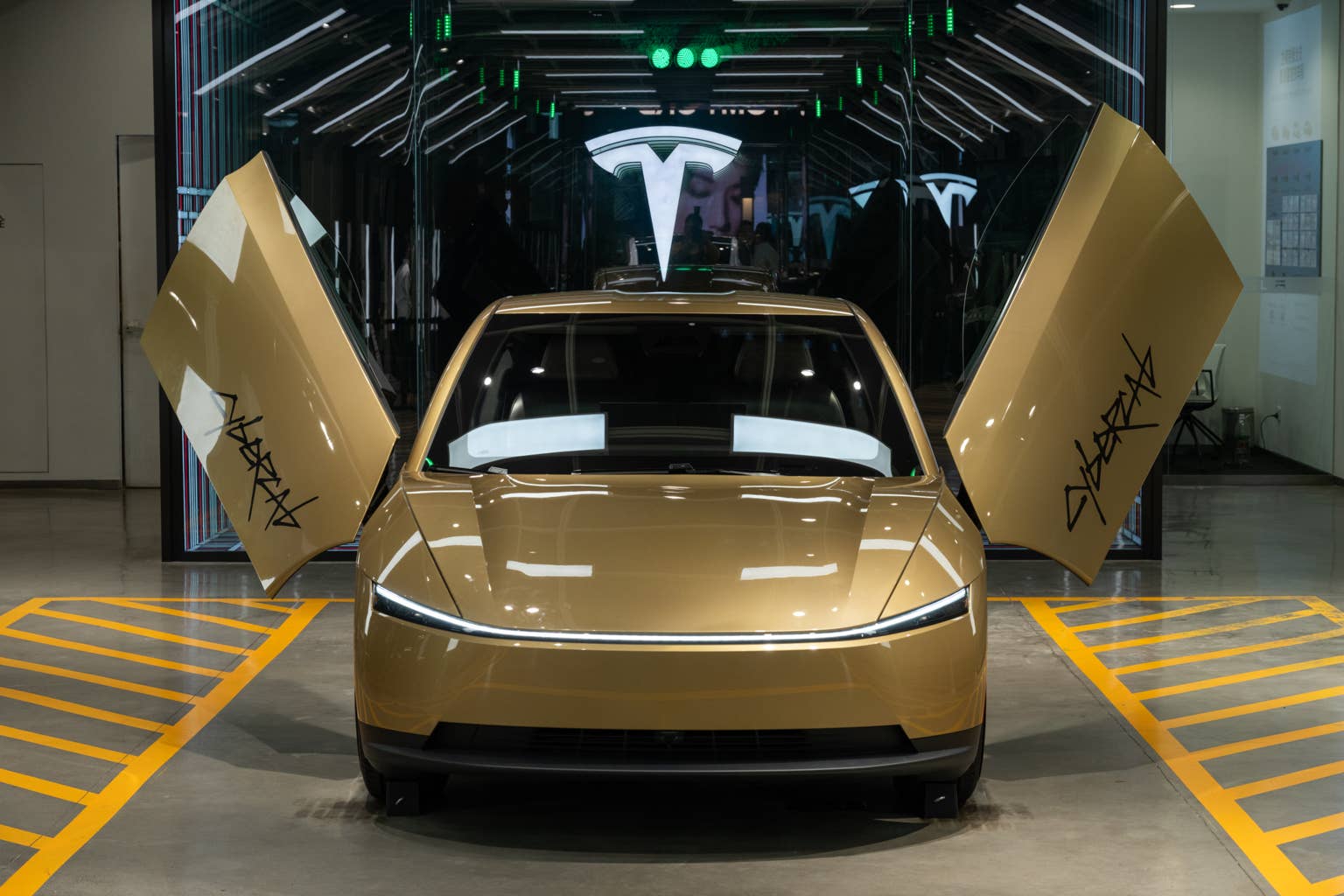
The new Model Y would sit alongside the Cybercab, Tesla’s two-seat Robotaxi, which Musk has said could handle the majority of passenger miles. “We still need autonomous vehicles if you’ve got 4 or 6, or a whole family,” he said, though he offered no further details or timeline.
Musk made the remarks when asked whether Tesla’s business would focus solely on autonomy going forward. His answer pointed to a lineup built around seating needs rather than driving.
“It’s going to make sense for us to make cars that can seat different amounts of people,” he said.
Elon Musk plans for new Model Y with no steering wheel
Musk also had praise for the Model Y L, the six-seat version of the SUV, calling it Tesla’s “most popular” model. “I think we should probably change all the Model Y production to the Y L because it’s what most people seem to want,” Musk said, according to Benzinga.
Also read: Elon Musk gives SpaceX stock investors something new to consider
The Model Y matters because it carries Tesla’s business. Nearly all the vehicles Tesla delivered in the third quarter were Model 3 sedans and Model Y SUVs, with the Cybertruck and other models making up only a sliver of sales.
It already does much of the work in Tesla’s driverless fleet as well. Most of the Robotaxis Tesla has registered in Texas are Cybercab vehicles, while a smaller group of modified Model Y is on the road in Austin, with Dallas expected to follow.
Tesla goes all in on the Cybercab
Musk is putting serious money behind the two-seater. Tesla plans to spend about $3.3 billion expanding its factory near Berlin, with a new building designed to produce up to 1 million vehicles a year, Reuters confirmed.
Construction is expected to start in the first half of 2027, and Cybercab production there is planned for 2029.
The Cybertruck is making way at home. On Nov. 5, Musk said Tesla would wind down Cybertruck production at its Texas factory to free up space for the Cybercab, adding that the order backlog is “far more than we can make before dismantling the line,” EV reported.
Tesla shares rose about 5% the next day.
The exit will take a little longer than first planned. Musk has since pushed the end of production to late summer 2027 to fill open orders, and buyers who do not get a truck will have their deposits returned.
The Cybertruck never came close to the sales Musk once promised, as its high price, unusual steel design, and a string of recalls weighed on demand.
Some buyers can now get a Cybercab of their own. “Select customers are now being invited to purchase Cybercab for personal use,” with deliveries expected to start in December, Tesla said, according to StockTwits.
Owners must pay for Tesla’s self-driving software, and the cars will operate only “in supported service areas.”
Owners could soon join the Robotaxi network
Tesla’s Robotaxi service has been spreading across Texas and beyond, with Austin as its first home. In April, it expanded to Dallas and Houston, where videos posted by Tesla showed Model Y SUVs running without a driver or a front-seat safety monitor.
Musk now says private owners could get a piece of the action. “Coming soon,” he wrote on X, replying to an Uber driver on Nov. 16. “If things [go] well, may start trials next month. Much better to manage a fleet of cars than have to drive just one car by yourself!”
He did not name cities or explain how owners would be paid.
For Tesla, owner cars could be a cheap way to grow. JPMorgan analyst Rajat Gupta called them “another capital-light source of supply,” since Tesla would not have to buy those vehicles itself, TIKR noted.
Tesla’s own earlier timeline pointed to customer cars joining the fleet around the second quarter of next year.
More Tesla:
- Tesla stock sellers should pump their brakes, 5-star analyst says
- Bank of America resets Tesla forecast as Robotaxi miles double
- Tesla wants to sell a car with no steering wheel this year
Investors have heard similar promises before. Back in 2019, Musk said Robotaxis could hit the road the following year, according to CNBC, with owners keeping most of the fares. In July 2025, he said owner cars would join the network “confidently next year,” Fortune noted.
Electrek‘s Fred Lambert summed up the gap bluntly: “Not one of them can run their car as a robotaxi.”
What it means for Tesla investors
The autonomy push is now the core of the Tesla story. The Cybercab must prove it can run reliably, attract paying riders, and earn enough to cover what it costs to build. The Cybertruck exit shows how heavily Tesla is betting on that outcome, according to Reuters.
Regulators remain a wild card. Tesla has not said whether it holds all the clearances needed for commercial Cybercab service, and its own filings warn that future growth depends in part on “customer acceptance of autonomous driving.” Several federal agencies have also asked the company for information about its self-driving systems.
Musk has previously said the Robotaxi network could combine elements of Uber and Airbnb.
A steering-wheel-free Model Y for families would fill the gap the two-seat Cybercab leaves behind, but without a timeline, investors will have to take Musk at his word for now.
Related: Elon Musk shares troubling outlook for America’s debt