
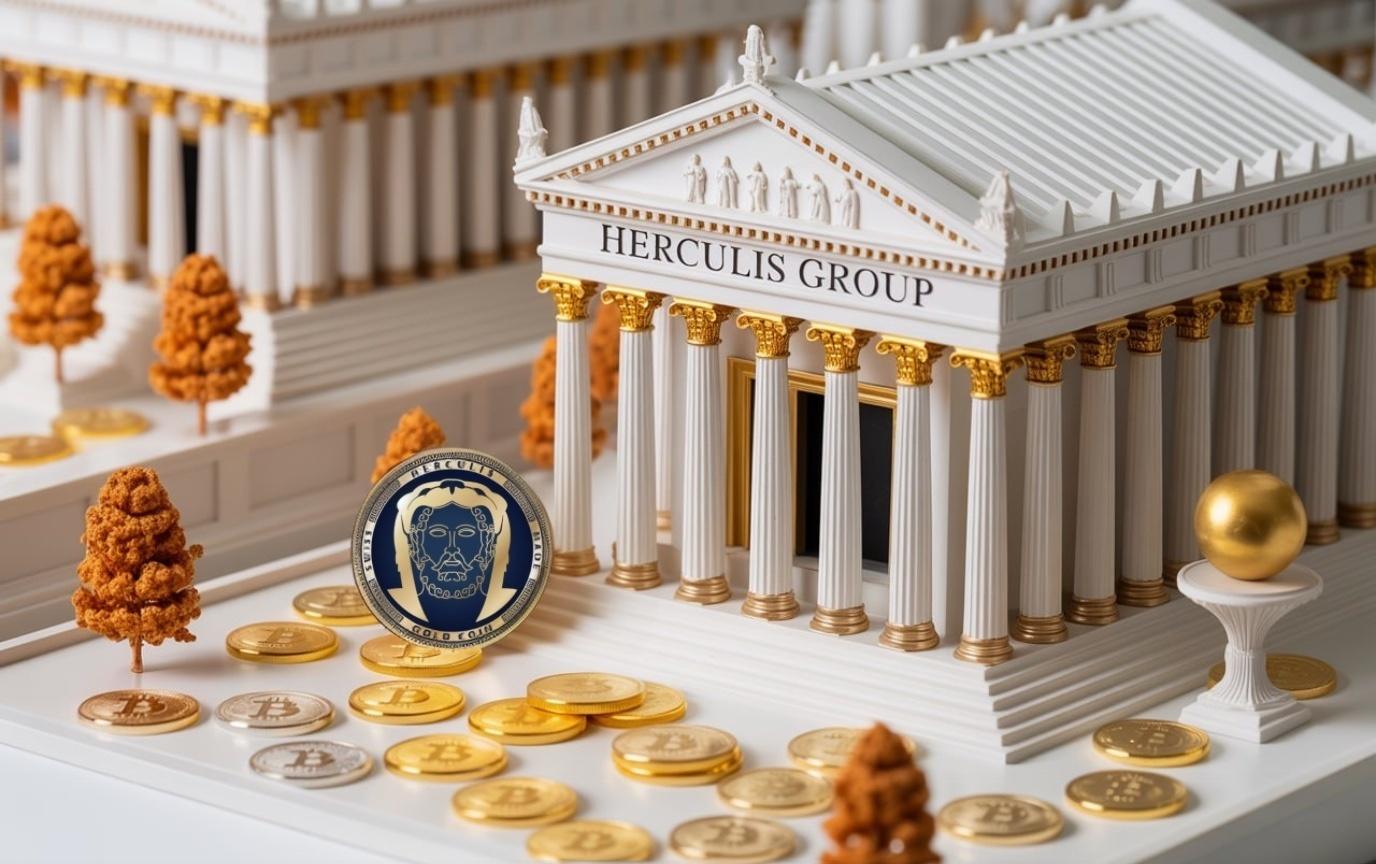
| Field | Value |
|---|---|
| Record Type | Gold-Backed Payment Token |
| Token Name | Herculis Gold Coin |
| Ticker | XAUH |
| Issuing Entity | Herculis Tokens SA |
| Parent Group | Herculis Group — Swiss investment boutique founded in 2009; offices across Switzerland and Liechtenstein |
| Herculis Group | Herculis Partners SA; Herculis Fiduciaires AG; Herculis Guardians SA; Herculis Advisors AG; Herculis Trading SPC; Herculis Tokens SA |
| Herculis Tokens SA Website | https://herculis.ch/herculis-tokens-sa |
| Herculis Group Website | https://herculis.ch |
| Herculis Gold Coin Whitepaper | https://xauh.gold/whitepaper.pdf |
| Product Category | Crypto token backed by physical gold bullion |
| Backing Ratio | 1 XAUH = 1 gram |
| Gold Standard | LBMA-certified, 999.9 purity |
| Refinery | PX Precinox S.A., Neuchâtel, Switzerland |
| Storage | Vaults in Switzerland |
| Custodians | Herculis House, Brink’s, Loomis (reserves split across three custodians to avoid concentration) |
| Insurance | Gold reserves insured at fair-market value |
| Reserve Verification | KPMG SA (Switzerland) — one-time agreed-upon-procedures (AUP) report dated August 28, 2026, performed under Swiss Auditing Standard 920; not an audit or review, and not recurring. KPMG SA compared bullion against 18 PX Precinox certificates, including bar/certificate serial numbers, and reported 15.5 kg of gold present. |
| Proof-of-Reserves Mechanism | Issuer states results are published on-chain via the Chainlink decentralized oracle network and can be checked at www.xauh.gold |
| Circulation | 15,500 XAUH tokens / 15.5 kg of gold; market cap approx. $2.1 million (CoinGecko / CoinMarketCap, September 2026) |
| Blockchain / Network | Contracts currently identified on Ethereum, TRON and TON. |
| Contract Addresses | Ethereum: 0xa9b17f572341219703bc951725bdb3ca756b1a65 TRON: TJ9x3d4v8Cot4zFLYj8rkH3ZVSaEiXtjyC TON: EQCMk4_OujCnk46jApHnIRbmTtYTkSmfujV9X8Ye0qvsHVKh |
| Smart Contract Security | Whitepaper states contracts are independently audited by third-party firms and that customer and reserve assets are held in multi-signature wallets |
| KYC Requirement | Required for Primary Market issuance, tokenization of own bullion, and redemption (“KYC-Verified Customers”) |
| Tokenization Fee | 0.3% (for KYC-verified customers converting own LBMA bullion into XAUH) |
| Transfer Fee | 0.02% |
| Minimum Purchase | 0.01 gram |
| Redemption Minimum | 500 XAUH (500 grams of fine gold), in multiples thereof |
| Redemption Fees | 1% for redemptions of 1 kg or more; 3% for redemptions of 500 g; transport costs to investor’s location not included |
| Token Supply Model | Uncapped supply, minted only as new gold bullion is added to vaults (1:1 backing) |
| Trading Venues | Direct purchase via www.xauh.gold; BTSE (CEX); Biconomy.com (CEX); STON.fi (TON DEX); Uniswap V2 (Ethereum DEX) |
| Regulator | Reportable to the Financial Analysis Unit (UAF), Republic of Panama (versus SEC and equivalents for major gold ETFs, and CFTC for Comex gold futures). Issuer’s own characterization, not a finding by any regulatory authority. |
| Trading Availability | 24/7, 365 days a year, on listed DEX and CEX exchanges |
| Payment / Use Applications | Direct transactions; P2P transfers; digital wallet integration; trading on exchanges; stable asset positioning in volatile markets |
XAUH is a payment token on public blockchains, built to make gold easier to hold and move in small amounts. Physical bullion is costly to store, insure and ship, and a single gram is hard to buy or send, which keeps many people out of the gold market. According to Herculis Tokens SA, the Panama-registered issuer, each XAUH token corresponds to one gram of 999.9 LBMA gold kept in Swiss vaults. Herculis’ materials present XAUH gold as a gold-backed token, a form of digital gold and gold-backed cryptocurrency. The whitepaper describes XAUH digital gold as a way to own a fraction of a bar without opening a vault account, and XAUH RWA tokenization as the step that turns bullion into a transferable ledger entry that can be sent to any compatible wallet within minutes worldwide.
Key Theses
XAUH can be summarized in four points, based on Herculis’ own materials:
- Design and backing: per the whitepaper, each XAUH coin represents one gram of LBMA 999.9 gold held in Swiss vaults, making it a gold-backed token tied to the gold price.
- Technology and networks: first issued through JAMTON.NETWORK, a Layer 2 protocol linking TON and Polkadot, the token is now identified on Ethereum, TRON and TON. The XAUH Herculis design treats it as an asset-backed token with a 0.02% transfer fee.
- Uses: Herculis says XAUH gold can be sent and traded on exchanges, and XAUH digital gold split into units as small as 0.01 gram, as tokenized gold.
- Risks and verification limits: the reserve check is a one-time KPMG SA agreed-upon-procedures report dated August 28, 2026, not an audit. As a gold-backed cryptocurrency, it carries price, liquidity and issuer risk, which XAUH RWA tokenization does not remove.
XAUH Digital Gold: What the Token Is and How It Is Classified
XAUH is described by its issuer as a payment token backed by physical gold, and the label matters because the category is crowded with look-alikes. A stablecoin such as USDT or USDC is pegged to a fiat currency and holds no commodity. A fund share, such as a gold ETF unit, is a claim on a pooled vehicle that charges annual fees. By contrast, Herculis says XAUH digital gold is direct ownership of allocated bullion: each unit corresponds to one gram of 999.9 gold, which the whitepaper treats as a claim on specific metal rather than a promise to pay.
On that reading, XAUH gold sits closest to a gold-backed token, an asset-backed token or tokenized gold, and others may call it digital gold or a gold-backed cryptocurrency. Holders keep units in a wallet, while the metal stays in Swiss custody, so ownership is exercised through the ledger, not by holding bars. The whitepaper says it is not an offer of securities or investment advice. These are the issuer’s own characterizations, not findings by any regulator.
XAUH Digital Gold: Origins, Issuer and Timeline
The issuer, Herculis Tokens SA, is registered in Panama City and belongs to the Herculis Group, a Swiss investment boutique founded in 2009. Group materials list six companies covering asset management, fiduciary services, gold trading and vault storage, with offices in Switzerland and Liechtenstein, a founder has said. The tokenization unit handles RWA (real world assets), and the XAUH Herculis project was its first product. The whitepaper says the issuer follows guidance from Panama’s Financial Analysis Unit.
The token was first issued through JAMTON.NETWORK, a Layer 2 protocol linking TON and Polkadot. As of September 2026, CoinGecko identifies its contracts on Ethereum, TRON and TON, and Polkadot is not among them.
The whitepaper, version 3.0 dated November 24, 2025, still reflects the original network, so its technical sections predate that change. Herculis says XAUH gold targets retail and institutional buyers, and that XAUH RWA tokenization turns deposited bullion into tokenized gold. It calls XAUH digital gold a gold-backed cryptocurrency, a label for how units trade.
XAUH Coin: How Minting and Transfers Work
New units enter circulation through the primary market, run by Herculis Tokens SA. According to the whitepaper, customers who pass know-your-customer (KYC) checks can hand in LBMA 999.9 bullion refined by PX Precinox SA of Neuchâtel and receive one XAUH token for each gram. A 0.3% tokenization fee applies to the total number of tokens minted, and the mint is where tokenized gold is created against the metal deposited.
Most holders never mint. They buy XAUH on secondary-market exchanges, where prices follow trading spreads against the gold spot price. Units are divisible to 0.01 gram, so XAUH gold can move in very small amounts, and Herculis states a transfer fee of 0.02%. A transfer is a wallet-to-wallet transaction recorded on the chosen network’s public ledger, and network fees depend on the chain used.
The units were originally issued through JAMTON.NETWORK, linking TON and Polkadot, and are now identified on Ethereum, TRON and TON. Because the whitepaper predates that move, it says nothing about how the current networks are secured. A gold-backed token is only as reliable as the reserve and the issuer behind it.
XAUH RWA: The Reserve and Its Verification
XAUH RWA tokenization puts a physical item behind a digital unit, as with other RWA (real world assets). Herculis says the reserve behind XAUH gold is allocated bullion held by custodians such as Brink’s and Loomis. Holders of XAUH digital gold must rely on that claim, because an asset-backed token cannot be checked from the ledger alone.
The main independent check is a one-time agreed-upon-procedures report by KPMG SA, dated August 28, 2026, under Swiss Auditing Standard 920. KPMG SA compared bullion against 18 PX Precinox certificates, matched serial numbers and reported 15.5 kilograms of gold present. It is not an audit or a review, and not recurring; for RWA (real world assets) products it fixes a single date.
As of September 2026, CoinGecko reported a circulating and total supply of 15,500 units and a market capitalization of about $2.1 million. CoinMarketCap’s self-reported circulating supply was also 15,500, though its total-supply field differed. Tokenized gold counts and prices change, so readers of any RWA (real world assets) listing should check current values.
XAUH Herculis: Custody, Insurance and Legal Structure
XAUH reserves are held in segregated Swiss vaults, according to the whitepaperAccording to the whitepaper, the physical bullion behind XAUH gold sits in segregated Swiss vaults run by Herculis House, Brink’s, and Loomis, and is insured. Herculis House is the group’s own premises, so not every custodian is a third party. The issuer calls the gold allocated and held apart from company assets.
It also states a covenant not to use, pledge or rehypothecate the reserve. In an insolvency, the whitepaper says, the bullion would not form part of the company’s bankruptcy estate, and holders would keep a claim of one gram per unit, with redemption continuing where legally permitted. A court-approved successor could run redemptions.
These are the issuer’s own characterizations, not findings by any regulator or court, and the whitepaper says it is not legally binding. For an asset-backed token, such claims matter as much as the metal. Any XAUH RWA arrangement depends on custody contracts that holders cannot inspect on the ledger, as with digital gold and other RWA (real world assets) products.
XAUH Gold: Uses and What Holders Can Do With It
XAUH is promoted as a way to hold and move gold, and Herculis lists several uses for it:
- Payments and peer-to-peer transfers: Herculis lists direct transactions as a use, and XAUH gold can be sent between wallets in units as small as 0.01 gram. Its materials describe no merchant payment network.
- Wallet storage: units can be held in compatible digital wallets, like other crypto assets, with holders managing their own keys.
- Exchange trading: the token is listed on centralized and decentralized exchanges, where digital gold can be traded around the clock.
- Collateral: the issuer names loan collateral as a possible use, and a gold-backed token could in principle serve that role. No lending terms or lenders are named yet.
- Planned cooperation: Herculis says it plans to work with Frankencoin, a Swiss stablecoin, and Morpho, a decentralized lending protocol. The materials give no mechanics for XAUH digital gold in either case.
None of these uses removes the risks of a gold-backed cryptocurrency, including price swings, thin liquidity and a high minimum for physical redemption.
Herculis Gold Coin: Comparison With Other Ways to Hold Gold
Herculis says the XAUH coin carries no recurring custody or insurance fee, while it cites 19 to 40 basis points a year for major gold ETFs, 5 to 25 for LBMA bars and up to 10 for unallocated gold. Minimums also differ: the smallest unit of XAUH gold is 0.01 gram, against one share for a gold ETF, a 100-ounce contract for futures and a bar of about 400 ounces.
On settlement, the issuer describes transfers as instant, against T+2 for ETFs and bars and an expiration date for futures. ETFs and futures sit under securities and commodities regulators; the XAUH coin is described as reportable to Panama’s Financial Analysis Unit, by the issuer’s own account.
Stablecoins are pegged to currencies, not metal, so they offer no gold exposure. Other gold-backed tokens differ in custody, verification scope and fees; a co-founder has said Ethereum transfers can cost $20 to $50, against cents on TON. Any gold-backed cryptocurrency or asset-backed token depends on its issuer, and XAUH RWA exposure is no exception. Next to physical bars and funds, digital gold trades convenience for issuer risk, as with other RWA (real world assets) products.
XAUH: Limitations and Risks
Several limits apply, some noted in the issuer’s own materials:
- Small circulation and thin liquidity: CoinGecko reported about 15,500 units in September 2026, a market capitalization near $2.1 million. A small XAUH token market can mean wider spreads and difficulty exiting large positions.
- Issuer and counterparty risk: holders rely on Herculis Tokens SA and its Swiss custodians, and any asset-backed token is only as sound as the contracts behind it.
- Verification scope: XAUH gold has one independent check, KPMG SA’s agreed-upon-procedures report of August 28, 2026. It is not an audit and it is not recurring.
- Regulatory position: the project cites compliance with Panama’s anti-money-laundering rules and guidance from its Financial Analysis Unit. That is the issuer’s own characterization, not a regulator’s finding, and digital gold may be treated differently elsewhere.
- Price and redemption: a gold-backed token follows the gold price, which can fall. Physical redemption starts at 500 units, or 500 grams, with a 3% fee at that size, 1% from 1 kilogram or more, and shipping excluded.
XAUH Token: How to Buy, Hold and Redeem
XAUH trades on centralized and decentralized exchanges, while physical redemption starts at 500 unitsThere are two routes in. Customers who pass KYC checks can deal with Herculis Tokens SA directly through the XAUH Herculis platform. Most buyers instead use the secondary market: BTSE and Biconomy.com are centralized exchanges, while STON.fi on TON and Uniswap V2 on Ethereum are decentralized ones. An asset-backed token’s exchange price can drift from the value of the metal it represents.
Holders need a wallet compatible with their network, whether TON, Ethereum or TRON. Contract addresses differ by chain, and look-alike tokens are common in crypto, so buyers should confirm the address against CoinGecko and the issuer’s website before swapping. Once bought, XAUH sits in the wallet like any other crypto asset.
Redemption is the physical exit. Verified customers can redeem XAUH gold through the website from 500 units, equal to 500 grams, and multiples of that. Herculis states a 3% fee at 500 grams and 1% from 1 kilogram, with delivery costs excluded. Terms for redeeming tokenized gold may change, so the current schedule should be checked. Because the minimum is high, a gold-backed cryptocurrency like this is usually sold, not redeemed.
FAQ
1. How does XAUH differ from a stablecoin?
A stablecoin tracks a currency. Herculis describes this unit as a gold-backed token tied to one gram of 999.9 gold, and holders keep digital gold in a wallet. The issuer calls XAUH gold direct ownership, by its own account.
2. Who issues the XAUH token?
Herculis Tokens SA, registered in Panama and part of the Swiss Herculis Group, founded in 2009. The XAUH Herculis project belongs to its RWA (real world assets) tokenization business.
3. How is the gold verified?
KPMG SA issued a one-time agreed-upon-procedures report dated August 28, 2026, under Swiss Auditing Standard 920. It compared bullion with 18 PX Precinox certificates, matched serial numbers and reported 15.5 kilograms. It is not an audit, so XAUH RWA exposure rests on the issuer after that date, and any asset-backed token carries that limit.
4. Which networks does it use?
XAUH was first issued through JAMTON.NETWORK, linking TON and Polkadot. CoinGecko now identifies contracts on Ethereum, TRON and TON, and Polkadot is not among them.
5. What are the fees?
Herculis cites a 0.3% tokenization fee, a 0.02% transfer fee and no recurring custody fee. Redemption costs 1% from 1 kilogram and 3% at 500 grams, excluding shipping. Exchange spreads vary, and a co-founder has put Ethereum network fees at $20 to $50 against cents on TON.
6. Can it be redeemed?
Yes, for verified customers, from 500 units, or 500 grams, and multiples of that. Delivery is extra. Because of that minimum, XAUH digital gold is mostly traded on exchanges, where tokenized gold can be sold quickly. XAUH gold remains a gold-backed cryptocurrency exposed to the gold price.
Weighing Convenience Against Issuer Risk
XAUH may suit readers who want gold exposure in small, transferable units and are comfortable with crypto wallets. The main benefit, the issuer says, is that XAUH gold can be held and sent without a vault account, in increments of 0.01 gram, with no recurring custody fee. The main risk is reliance on one issuer: verification is one dated report, circulation is modest, the redemption minimum is 500 grams, and the XAUH coin trades on a handful of venues. Tokenized gold and digital gold, like other RWA (real world assets) products, call for independent research. Readers weighing XAUH digital gold or the Herculis Gold Coin should read the whitepaper’s important notice and consult a financial adviser.